Information Behavior in Serious Leisure
LIS7000 Research Methods in Library and Information Science
Overview
Examined how serious leisure engagement relates to baseball fans’ information behavior, using an online survey of 52 participants. The study drew on Serious Leisure Theory by sociologist Robert Stebbins and information activity framework.
Methods: Survey Research · Reliability Analysis · Independent t-tests · Simple & Multiple Linear Regression
Serious Leisure Characteristics
- Perseverance: The willingness to continue participating in the activity despite challenges, failures, or difficulties.
- Career: The long-term progression of participation through stages such as beginning, development, establishment, maintenance, and decline.
- Significant Effort: The investment of substantial time, knowledge, training, or skill development related to the activity.
- Durable Benefits: The lasting personal and social rewards gained through participation, such as self-development, achievement, and social connection.
- Identity: A strong sense of self-definition and personal attachment formed through participation in the activity.
- Unique Ethos: The shared culture, values, norms, language, and social practices that emerge within the participant community.
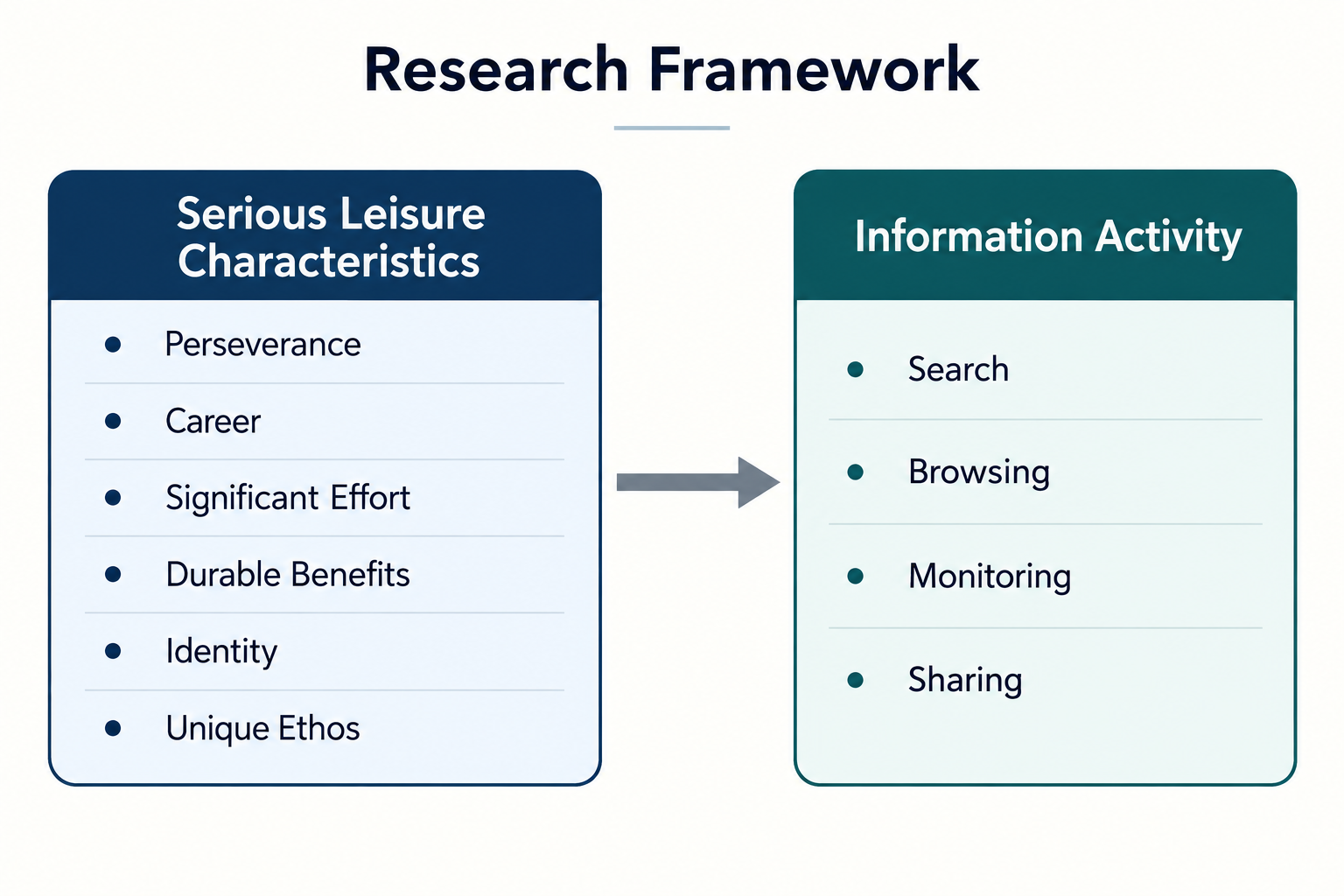
Research framework
Key Findings
- Higher engagement, greater information activity: Fans with higher serious leisure scores reported significantly more searching, browsing, monitoring, and sharing.
- Effort matters: Among the six serious leisure characteristics, significant effort showed the strongest positive association with overall information activity (b = 1.57, p < .001).
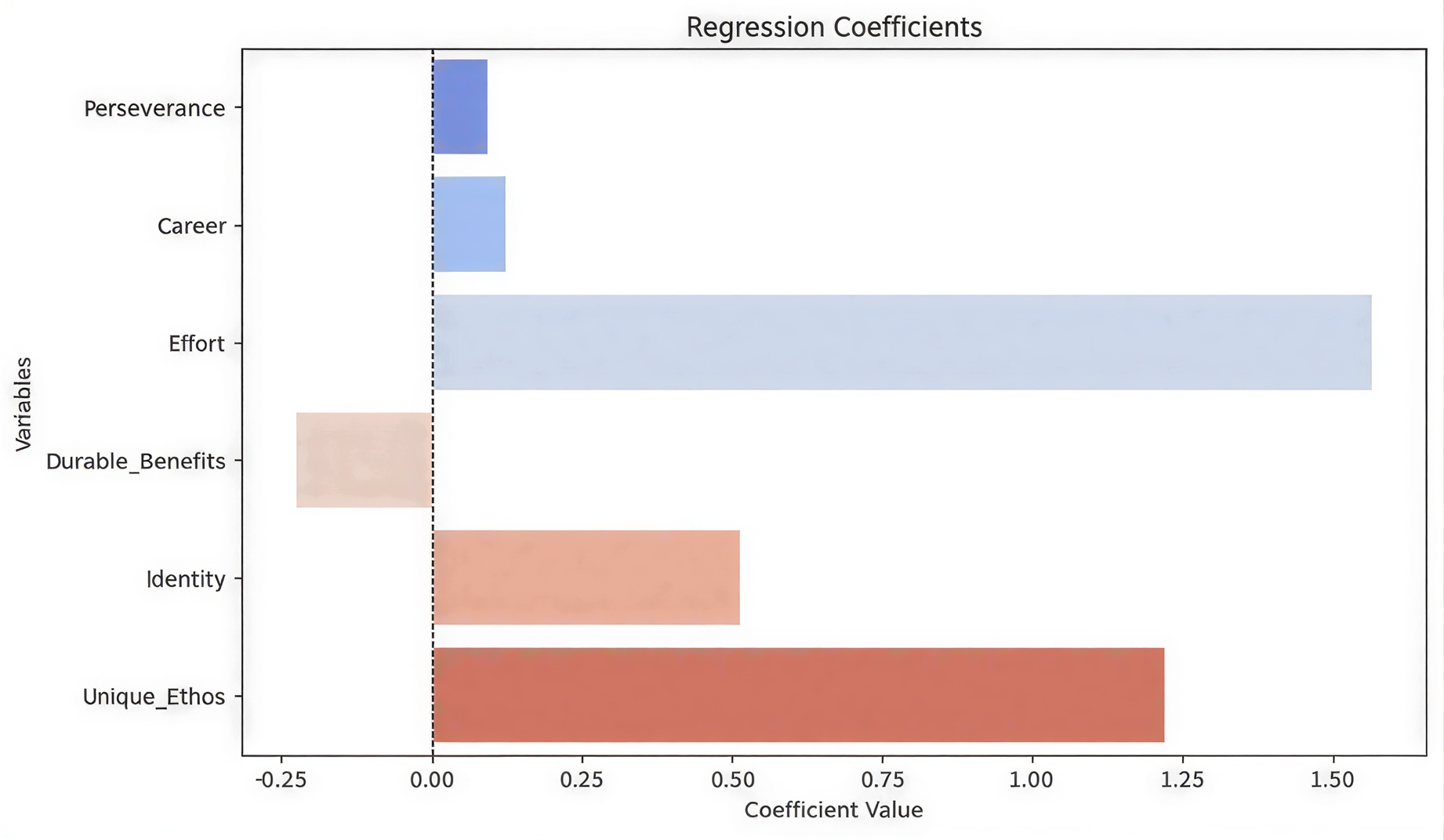
Regression coefficient visualization
Tools: Google Forms · Python · Pandas · NumPy · Scikit-learn · Statsmodels · Matplotlib